


Link: Brooklyn Baby
They say I'm too young to love you
I don't know what I need
They think I don't understand
The freedom land of the seventies
I think I'm too cool to know ya
You say I'm like the ice I freeze
I'm churning out novels like
Beat poetry on Amphetamines
I say
I say
Well, my boyfriend's in a band
He plays guitar while I sing Lou Reed
I've got feathers in my hair
I get down to Beat poetry
And my jazz collection's rare
I can play most anything
I'm a Brooklyn baby
I'm a Brooklyn baby
They say I'm too young to love you
They say I'm too dumb to see
They judge me like a picture book
By the colors, like they forgot to read
I think we're like fire and water
I think we're like the wind and sea
You're burning up, I'm cooling down
You're up, I'm down
You're blind, I see
But I'm free
I'm free
Well, my boyfriend's in a band
He plays guitar while I sing Lou Reed
I've got feathers in my hair
I get down to Beat poetry
And my jazz collection's rare
I can play most anything
I'm a Brooklyn baby
I'm a Brooklyn baby
I'm talking about my generation
Talking about that newer nation
And if you don't like it
You can beat it
Beat it, baby
You never liked the way I said it
If you don't get it, then forget it
So I don't have to fucking explain it
And my boyfriend's in a band
He plays guitar while I sing Lou Reed
I've got feathers in my hair
I get high on hydroponic weed
And my jazz collection's rare
I get down to beat poetry
I'm a Brooklyn baby
I'm a Brooklyn baby
Yeah my boyfriend's pretty cool
But he's not as cool as me
Cause I'm a Brooklyn baby
I'm a Brooklyn baby
They say I'm too young to love you
I don't know what I need
They think I don't understand
The freedom land of the seventies
I think I'm too cool to know ya
You say I'm like the ice I freeze
I'm churning out novels like
Beat poetry on Amphetamines
I say
I say
Well, my boyfriend's in a band
He plays guitar while I sing Lou Reed
I've got feathers in my hair
I get down to Beat poetry
And my jazz collection's rare
I can play most anything
I'm a Brooklyn baby
I'm a Brooklyn baby
They say I'm too young to love you
They say I'm too dumb to see
They judge me like a picture book
By the colors, like they forgot to read
I think we're like fire and water
I think we're like the wind and sea
You're burning up, I'm cooling down
You're up, I'm down
You're blind, I see
But I'm free
I'm free
Well, my boyfriend's in a band
He plays guitar while I sing Lou Reed
I've got feathers in my hair
I get down to Beat poetry
And my jazz collection's rare
I can play most anything
I'm a Brooklyn baby
I'm a Brooklyn baby
I'm talking about my generation
Talking about that newer nation
And if you don't like it
You can beat it
Beat it, baby
You never liked the way I said it
If you don't get it, then forget it
So I don't have to fucking explain it
And my boyfriend's in a band
He plays guitar while I sing Lou Reed
I've got feathers in my hair
I get high on hydroponic weed
And my jazz collection's rare
I get down to beat poetry
I'm a Brooklyn baby
I'm a Brooklyn baby
Yeah my boyfriend's pretty cool
But he's not as cool as me
Cause I'm a Brooklyn baby
I'm a Brooklyn baby

I was thinking 'bout her, thinking 'bout me
Thinking 'bout us, what we gon' be
Open my eyes yeah, it was only just a dream
So I travelled back down that road
Will she come back? No one knows
I realize, yeah, it was only just a dream
I was at the top and now it's like I'm in the basement
Number one spot and now she find her a replacement
I swear now I can't take it, knowing somebody's got my baby
And now you ain't around baby I can't think
I should've put it down, should've got the ring
Cause I can still feel it in the air
See her pretty face, run my fingers through her hair
My lover, my life, my shawty, my wife
She left me, I'm tied
Cause I knew that it just ain't right
I was thinking 'bout her, thinking 'bout me
Thinking 'bout us, what we gon' be
Open my eyes, yeah, it was only just a dream
So I travelled back down that road
Will she come back? No one knows
I realize, yeah, it was only just a dream
When I be ridin', man, I swear I see her face at every turn
Tryna get my Usher over I can't let it burn
And I just hope she know that she the only one I yearn for
More and more I miss her. When will I learn?
Didn't give her all my love, I guess now I got my payback
Now I'm in the club thinking all about my baby
Hey, she was so easy to love
But wait, I guess that love wasn't enough
I'm going through it every time that I'm alone
And now I'm missing, wishing she'd pick up the phone
But she made the decision that she wanted to move on
Cause I was wrong
I was thinking 'bout her, thinking 'bout me
Thinking 'bout us, what we gon' be
Open my eyes yeah, it was only just a dream
So I travelled back, down that road
Will she come back, no one knows
I realize yeah, it was only just a dream
If you ever loved somebody put your hands up
If you ever loved somebody put your hands up
And now they're gone and you're wishing you could give them everything
Said if you ever loved somebody put your hands up
If you ever loved somebody put your hands up
Now they're gone and you're wishing you could give them everything
[2x]
I was thinking 'bout her, thinking 'bout me
Thinking 'bout us, what we gon' be
Open my eyes yeah, it was only just a dream
So I travelled back, down that road
Will she come back, no one knows
I realize yeah, it was only just a dream

So many breakups are so agonizing because they should have ended so long ago, far before the actual breakup took place. The time between the toxicity began, and the relationship ended, there are so many aspects to the relationship that had become broken, debilitated, flawed, decayed, defective, and we as the couple (at the time) had become maladjusted. This was the case in all my failed relationships with toxic men.
Most of us can admit to remaining in a toxic relationship well beyond its expiration date. Few of us get out unscathed in life in that department. We often remain in these relationships for many reasons, which are rarely any good.
We remain here until we eventually find that we can see the trees beyond the forest and we are able to see the relationship for what it is and more importantly for what it is not.
"In writing this blog, I was reminded of two previous toxic relationships that overlapped in time, which feel like a lifetime ago for me—a friendship and a marriage. The friendship started when we bonded over intense doctoral demands and for each of us, an impending divorce.
However, the friendship turned toxic when I was able to see the truth in her personality and how she treated others: condescending and often with a self-righteous attitude, which is the opposite of my value system. As I slowly came out of my "divorce fog" as I refer to it, I quickly ended our friendship and moved on from my divorce. I learned a valuable lesson in both of these experiences: Introspection and distance provides invaluable clarity."


When you are in agreement with the other person, the relationship is going well. When you disagree, relationship strife bubbles to the top and the relationship becomes uncomfortable. Ask yourself the following questions:
"Do you like this person?(Y/N)
"Are they good for you?"(N/N)
"Do they bring out the good in you?(N/N)
"Do you find that you become more negative while in their presence?"(Y/Y)
"What are some of the feelings that you experience when around them?"
Is there more criticism than compassion?"


You're not allowed to grow and change. Whenever you aim to grow and improve yourself, the other person responds with mockery and disbelief. There is no encouragement or support for your efforts. Instead, they keep you stuck in old judgments insisting that you will never be any different than you are now.

Set Yourself Free, spend time on your own, travel, fall in love with you.


Growth and change is part of life, yet they feel threatened by your growth and your desire to improve yourself. Because they toxic people are negative, they seek to stifle your growth, question why you would want to change, and make you feel bad for wanting to improve. You might question your judgment. Don't! It's not about you being unhealthy, its about them being unhealthy.

Recognizing a toxic relationship includes listening to your intuition, that "inner voice" we all have, which often steers us in the right direction. You just need to take the time to listen to it. Do you find yourself questioning your decisions? Are you neglecting what's important to you? Are you forsaking your values for another? This could be indicative of an unhealthy and toxic relationship.

(I told my husband about my diagnosis on our first date)


The most important things a partner can have for someone with bipolar disorder is patience and tolerance, Dr. Brodsky said. A successful relationship involves a partner who is willing to tolerate uncertainty, learn to help the other person modify negative behavior, and is willing to let go of control.
“Trust is big,” he said. “They’re not going to be able to have the ability to control everything.”
When a partner becomes a partner in treatment, he or she can gain a better insight into how a person feels, how therapy affects them, or how to spot the changes in mood.
Make a Contract
You don’t have to sit down with a lawyer like you’re going through a prenuptial agreement, but you should set aside some time to make an agreement over things related to your bipolar disorder.
“Absolutely we are looking to come to an agreement and some ground rules,” Dr. Brodsky said. “Whether the contract is written or not is the least important issue.”
Some of these guidelines include guidelines for when a partner needs to intervene on potentially destructive behavior, and what a partner can do to enforce the contract, Dr. Brodsky said.
If you’re well in tune with your disorder and can feel the shift from mania to depression or vice versa coming, tell your partner. That’s when it’s important to stick to your contract.
There Will Be Problems
Every relationship has its problems, no matter how perfect it seems to be. A large part of relationships when one partner has bipolar disorder is distinguishing when a problem is a normal problem, or when it stems from something related to bipolar disorder.
Say, for instance, you have an argument over whose turn it is to do the dishes. That’s a normal problem. Tracy, like many other people with bipolar disorder, learned to distinguish what is a normal relationship problem, what is a serious problem, and when she’s being blamed for something. She’s learned when people use her

illness as an excuse, and then it’s off to the curb with them.
“People will blame your bipolar disorder for their bad behavior. While with other illnesses it is much less acceptable to leave someone for, say, cancer, but it’s perfectly okay in some people’s minds to leave someone because of a mental illness,” she said. “And, for some, it’s perfectly okay to treat someone badly because of a mental illness too. And it’s also okay to blame every behavior you don’t like on your partner’s mental illness. What I wish I knew is that even though I never use my illness as an excuse, other people will.”
Bipolar Disorder and Marriage

Any number of things, from work stress to money issues, can lead to arguments and put strain on a marriage. But when one partner has bipolar disorder, simple stressors can reach epic proportions. That may be why as many as 90% of marriages involving someone with bipolar disorder reportedly fail. McNulty watched not only his own marriage fall apart, but the marriages of others with bipolar disorder as well. "I've been running a support group for almost 19 years," he says. "I've seen dozens of couples come through the door with their marriage in tatters." Bipolar disorder "puts a huge additional strain on a relationship, particularly when you don't have a diagnosis." (I do have a diagnosis, treated and stabilized, and we both have our Jesus)

As much as you’d like to be there for the person, there comes a point where you must weigh your options and decide if it’s time to walk away and end the relationship.
Here are some important questions you should ask yourself before making your decision:
Is the person making an effort to improve their condition?
Is his or her condition improving?
How patient can you be?
Does the person’s behavior put your health at risk?
Can you accept the person the way he or she is or do you want the person to change?
Do you prefer stability or are you looking for excitement?
If you want a person to change, you must first realize how hard it is to change yourself. While treatments for bipolar disorder can help control the condition, it will be a constant battle throughout his or her life.
Dr. Michael Brodsky, medical director of Bridges to Recovery—a crisis stabilization center with several locations in California—said while people with bipolar disorder are known to be creative, charismatic, energetic, and inspirational, they can also be unpredictable, promiscuous, inattentive, and self-focused. Some of these qualities make it hard on a relationship, so a person must weigh whether he or she wants stability over excitement, he said.
Dr. Brodsky said there’s no perfect time to end a relationship with someone who is bipolar.
If you decide to end a relationship because of a person’s bipolar disorder, try not to blame the person or their condition. It is no one’s fault that the person has the condition.
Their condition is serious, and it’s difficult to be with someone who doesn’t want to get better. If the person refuses to get help, you may choose to end a relationship.
Here are some reasons you may need to end the relationship:
Your partner is dangerous.
He or she becomes careless or reckless during mania.
Your partner blames you for his or her problems.
Your partner neglects treatments on purpose.
Dr. David Reiss, interim medical director of the Providence Behavioral Health Hospital, said the first rule thing to consider if it’s time to end a relationship is your own safety, especially if a person is unstable.
“Of course leaving without warning or discussion will be destabilizing for the other person, but if it is an issue of safety, you must protect yourself,” Dr. Reiss said. “Even if there is no risk of danger or violence, keep in mind that you cannot predict or take responsibility for the other person’s behaviors. They may respond with more intense anxiety, depression or anger than you expect or they might have been closer to wanting to break it off themselves than you realized, and may react with relief —or denial.”
Dr. Reiss said the nature of the commitment. Married couples take a vow to remain together “for better or worse, in sickness or in health…” where leaving the person “can be seen as abandonment and sabotage – and there is a reality to that perception.”
“There are still times it is reasonable to leave, but do not deny responsibility for having broken your promise,” Dr. Reiss said. “You can try to explain it, your reasons may be valid, but take responsibility and validate the other person’s feelings.”
If you’re not married, it is NOT abandonment or sabotage, no matter how the other person perceives it.
“But if you start feeling guilty when the reality is that you had not made the commitment the other person implicitly expected, your guilt will trigger anger, depression, etc. in both yourself and in the other person and make it worse,” Dr. Reiss said. “Work through your own guilt as much as possible before, during and after the break-up.”
You can attempt to be as supportive as possible during the break up, but some people do not want help and support because they feel rejected.
“They may not be capable of ‘working through’ a relationship ending in an effective way, and mature ‘closure’ may be impossible. Be kind, but not overbearing, and realize that once you are ending the relationship, your kindness may not be welcome anymore, and that’s ok,” he said. “Don’t take it as a personal attack. If you come across as hurt or angry because your attempts to ‘let them down easily’ aren’t working, that only makes the situation worse. Acknowledge that how the other person reacts, and their ability to maintain even a superficial or polite relationship after a perceived rejection, may be inherently limited and beyond your control. Do try to be compassionate, but be ready to have that compassion rejected without taking it personally.”
http://www.healthline.com/health/bipolar-disorder/caregiver-break-up#2

Thinking 'bout us, what we gon' be
Open my eyes yeah, it was only just a dream
So I travelled back down that road
Will she come back? No one knows
I realize, yeah, it was only just a dream
I was at the top and now it's like I'm in the basement
Number one spot and now she find her a replacement
I swear now I can't take it, knowing somebody's got my baby
And now you ain't around baby I can't think
I should've put it down, should've got the ring
Cause I can still feel it in the air
See her pretty face, run my fingers through her hair
My lover, my life, my shawty, my wife
She left me, I'm tied
Cause I knew that it just ain't right
I was thinking 'bout her, thinking 'bout me
Thinking 'bout us, what we gon' be
Open my eyes, yeah, it was only just a dream
So I travelled back down that road
Will she come back? No one knows
I realize, yeah, it was only just a dream
When I be ridin', man, I swear I see her face at every turn
Tryna get my Usher over I can't let it burn
And I just hope she know that she the only one I yearn for
More and more I miss her. When will I learn?
Didn't give her all my love, I guess now I got my payback
Now I'm in the club thinking all about my baby
Hey, she was so easy to love
But wait, I guess that love wasn't enough
I'm going through it every time that I'm alone
And now I'm missing, wishing she'd pick up the phone
But she made the decision that she wanted to move on
Cause I was wrong
I was thinking 'bout her, thinking 'bout me
Thinking 'bout us, what we gon' be
Open my eyes yeah, it was only just a dream
So I travelled back, down that road
Will she come back, no one knows
I realize yeah, it was only just a dream
If you ever loved somebody put your hands up
If you ever loved somebody put your hands up
And now they're gone and you're wishing you could give them everything
Said if you ever loved somebody put your hands up
If you ever loved somebody put your hands up
Now they're gone and you're wishing you could give them everything
[2x]
I was thinking 'bout her, thinking 'bout me
Thinking 'bout us, what we gon' be
Open my eyes yeah, it was only just a dream
So I travelled back, down that road
Will she come back, no one knows
I realize yeah, it was only just a dream
So many breakups are so agonizing because they should have ended so long ago, far before the actual breakup took place. The time between the toxicity began, and the relationship ended, there are so many aspects to the relationship that had become broken, debilitated, flawed, decayed, defective, and we as the couple (at the time) had become maladjusted. This was the case in all my failed relationships with toxic men.
Most of us can admit to remaining in a toxic relationship well beyond its expiration date. Few of us get out unscathed in life in that department. We often remain in these relationships for many reasons, which are rarely any good.
We remain here until we eventually find that we can see the trees beyond the forest and we are able to see the relationship for what it is and more importantly for what it is not.
"In writing this blog, I was reminded of two previous toxic relationships that overlapped in time, which feel like a lifetime ago for me—a friendship and a marriage. The friendship started when we bonded over intense doctoral demands and for each of us, an impending divorce.
However, the friendship turned toxic when I was able to see the truth in her personality and how she treated others: condescending and often with a self-righteous attitude, which is the opposite of my value system. As I slowly came out of my "divorce fog" as I refer to it, I quickly ended our friendship and moved on from my divorce. I learned a valuable lesson in both of these experiences: Introspection and distance provides invaluable clarity."
5 Signs You're in a Toxic Relationship
"As I was reading up on this popular topic, I came across a blog, 5 Signs You're In A Toxic Relationship, by Yvette Bowlin, who eloquently summed up what it means to be in a toxic relationship. "Toxic doesn't only entail obvious damage like physical abuse, stealing, or name-calling. It also represents all the internal turmoil that results from an unhealthy relationship."'
"Not only could I relate to many of these things, but felt compelled to share some of the things I have learned along the way not only from my own personal experiences but from those whom I help(ed).
It seems like you can't do anything right. The other person constantly puts you down as not good enough. They mock your personality, and you feel ashamed most of the time. You only feel pardoned when you take on the traits of the person doing the condemning or judging. Belittling makes you feel less than and takes away your power and inner strength." PUBLISHED: APRIL 25, 2014 | BY YOURTANGO
"As I was reading up on this popular topic, I came across a blog, 5 Signs You're In A Toxic Relationship, by Yvette Bowlin, who eloquently summed up what it means to be in a toxic relationship. "Toxic doesn't only entail obvious damage like physical abuse, stealing, or name-calling. It also represents all the internal turmoil that results from an unhealthy relationship."'
"Not only could I relate to many of these things, but felt compelled to share some of the things I have learned along the way not only from my own personal experiences but from those whom I help(ed).
It seems like you can't do anything right. The other person constantly puts you down as not good enough. They mock your personality, and you feel ashamed most of the time. You only feel pardoned when you take on the traits of the person doing the condemning or judging. Belittling makes you feel less than and takes away your power and inner strength." PUBLISHED: APRIL 25, 2014 | BY YOURTANGO
When you are in agreement with the other person, the relationship is going well. When you disagree, relationship strife bubbles to the top and the relationship becomes uncomfortable. Ask yourself the following questions:
"Do you like this person?(Y/N)
"Are they good for you?"(N/N)
"Do they bring out the good in you?(N/N)
"Do you find that you become more negative while in their presence?"(Y/Y)
"What are some of the feelings that you experience when around them?"
Is there more criticism than compassion?"
The answers to these questions are important and telling!
Everything is about them and never about you. You have feelings, too, but the other person won't hear them. You're unable to have a two-sided conversation where your opinion is heard, considered and respected. Instead of acknowledging your feelings, they battle with you until they get the last word.The toxic person seldom, if ever, asks about you and the conversation is one sided. If you do share, its momentary and they find a way to quickly return the conversation back to them.
Everything is about them and never about you. You have feelings, too, but the other person won't hear them. You're unable to have a two-sided conversation where your opinion is heard, considered and respected. Instead of acknowledging your feelings, they battle with you until they get the last word.The toxic person seldom, if ever, asks about you and the conversation is one sided. If you do share, its momentary and they find a way to quickly return the conversation back to them.
You find yourself unable to enjoy good moments with this person. Every day brings another challenge. It seems as though they are always raising gripes about you. Their attempt to control your behavior is an attempt to control your happiness. Furthermore, they focus on the negative to keep you in the same state that they are: unhappy and miserable—though they would not admit that.
You're uncomfortable being yourself around that person. You don't feel free to speak your mind. You have to put on a different face just to be accepted by that person. You realize you don't even recognize yourself anymore, and neither do your closest friends and family.
You're uncomfortable being yourself around that person. You don't feel free to speak your mind. You have to put on a different face just to be accepted by that person. You realize you don't even recognize yourself anymore, and neither do your closest friends and family.
You're not allowed to grow and change. Whenever you aim to grow and improve yourself, the other person responds with mockery and disbelief. There is no encouragement or support for your efforts. Instead, they keep you stuck in old judgments insisting that you will never be any different than you are now.
Set Yourself Free, spend time on your own, travel, fall in love with you.
(All of the pictures of myself were taken while I was single)
Being in a healthy relationship means you feel safe and at ease to be yourself. You can live your life with authenticity. Sharing your thoughts and feelings are acknowledged and embraced not ridiculed and left to make you feel uncomfortable.
Open and honest communication is at the core. Healthy partners are trusting and supportive. They are less critical, are able to handle their own problems, are less defensive, and do not turn the conversation around and blame you when they are struggling. A balanced relationship.
Growth and change is part of life, yet they feel threatened by your growth and your desire to improve yourself. Because they toxic people are negative, they seek to stifle your growth, question why you would want to change, and make you feel bad for wanting to improve. You might question your judgment. Don't! It's not about you being unhealthy, its about them being unhealthy.
Recognizing a toxic relationship includes listening to your intuition, that "inner voice" we all have, which often steers us in the right direction. You just need to take the time to listen to it. Do you find yourself questioning your decisions? Are you neglecting what's important to you? Are you forsaking your values for another? This could be indicative of an unhealthy and toxic relationship.
Read more: http://www.yourtango.com/experts/dr-kristin-davin-psy-d/set-yourself-free-toxic-relationships#ixzz3C3E6tn4M
The Guy's View:
1. THE RELATIONSHIP SCORECARD

The Guy's View:
1. THE RELATIONSHIP SCORECARD
What It Is: The “keeping score” phenomenon is when someone you’re dating continues to blame you for past mistakes you made in the relationship. If both people in the relationship do this it devolves into what I call “the relationship scorecard,” where it becomes a battle to see who has screwed up the most over the months or years, and therefore who owes the other one more.
You were an ass**** at Cynthia’s 28th birthday party back in 2010 and it has proceeded to ruin your life ever since. Why? Because there’s not a week that goes by that you’re not reminded of it. But that’s OK, because that time you caught her sending flirtatious text messages to her co-worker immediately removes her right to get jealous, so it’s kind of even, right?
Wrong.
Why It’s Toxic: The relationship scorecard develops over time because one or both people in a relationship use past wrongdoings in order to try and justify current righteousness. This is a double-whammy of suckage. Not only are you deflecting the current issue itself, but you’re ginning up guilt and bitterness from the past to manipulate your partner into feeling wrong in the present.
If this goes on long enough, both partners eventually spend most of their energy trying to prove that they’re less culpable than the other, rather than solving the current problem. People spend all of their time trying to be less wrong for each other instead of being more right for each other.
What You Should Do Instead: Deal with issues individually unless they are legitimately connected. If someone habitually cheats, then that’s obviously a recurring problem. But the fact that she embarrassed you in 2010 and now she got sad and ignored you today in 2013 have nothing to do with each other, so don’t bring it up.
You must recognize that by choosing to be with your significant other, you are choosing to be with all of their prior actions and behaviors. If you don’t accept those, then ultimately, you are not accepting them. If something bothered you that much a year ago, you should have dealt with it a year ago.
You were an ass**** at Cynthia’s 28th birthday party back in 2010 and it has proceeded to ruin your life ever since. Why? Because there’s not a week that goes by that you’re not reminded of it. But that’s OK, because that time you caught her sending flirtatious text messages to her co-worker immediately removes her right to get jealous, so it’s kind of even, right?
Wrong.
Why It’s Toxic: The relationship scorecard develops over time because one or both people in a relationship use past wrongdoings in order to try and justify current righteousness. This is a double-whammy of suckage. Not only are you deflecting the current issue itself, but you’re ginning up guilt and bitterness from the past to manipulate your partner into feeling wrong in the present.
If this goes on long enough, both partners eventually spend most of their energy trying to prove that they’re less culpable than the other, rather than solving the current problem. People spend all of their time trying to be less wrong for each other instead of being more right for each other.
What You Should Do Instead: Deal with issues individually unless they are legitimately connected. If someone habitually cheats, then that’s obviously a recurring problem. But the fact that she embarrassed you in 2010 and now she got sad and ignored you today in 2013 have nothing to do with each other, so don’t bring it up.
You must recognize that by choosing to be with your significant other, you are choosing to be with all of their prior actions and behaviors. If you don’t accept those, then ultimately, you are not accepting them. If something bothered you that much a year ago, you should have dealt with it a year ago.
2. DROPPING “HINTS” AND OTHER PASSIVE-AGGRESSION
What It Is: Instead of stating a desire or thought overtly, your partner tries to nudge you in the right direction of figuring it out yourself. Instead of saying what’s actually upsetting you, you find small and petty ways to p**** your partner off so you’ll then feel justified in complaining to them.
Why It’s Toxic: Because it shows that you two are not comfortable communicating openly and clearly with one another. A person has no reason to be passive-aggressive if they feel safe expressing any anger or insecurity within the relationship. A person will never feel a need to drop “hints” if they feel like they won’t be judged or criticized for it.
What You Should Do Instead: State your feelings and desires openly. And make it clear that the other person is not necessarily responsible or obligated to them but that you’d love to have their support. If they love you, they’ll almost always be able to give it.
What It Is: Instead of stating a desire or thought overtly, your partner tries to nudge you in the right direction of figuring it out yourself. Instead of saying what’s actually upsetting you, you find small and petty ways to p**** your partner off so you’ll then feel justified in complaining to them.
Why It’s Toxic: Because it shows that you two are not comfortable communicating openly and clearly with one another. A person has no reason to be passive-aggressive if they feel safe expressing any anger or insecurity within the relationship. A person will never feel a need to drop “hints” if they feel like they won’t be judged or criticized for it.
What You Should Do Instead: State your feelings and desires openly. And make it clear that the other person is not necessarily responsible or obligated to them but that you’d love to have their support. If they love you, they’ll almost always be able to give it.
3. HOLDING THE RELATIONSHIP HOSTAGE
What It Is: When one person has a simple criticism or complaint and blackmails the other person by threatening the commitment of the relationship as a whole. For instance, if someone feels like you’ve been cold to them, instead of saying, “I feel like you’re being cold sometimes,” they will say, “I can’t date someone who is cold to me all of the time.”
Why It’s Toxic: It’s emotional blackmail and it creates tons of unnecessary drama. Every minor hiccup in the flow of the relationship results in a perceived commitment crisis. It’s crucial for both people in a relationship to know that negative thoughts and feelings can be communicated safely to one another without it threatening the relationship itself. Otherwise people will suppress their true thoughts and feelings which leads to an environment of distrust and manipulation.
What You Should Do Instead: It’s fine to get upset at your partner or to not like something about them. That’s called being a normal human being. But understand that committing to a person and always liking a person are not the same thing. One can be committed to someone and not like everything about them. One can be eternally devoted to someone yet actually be annoyed or angered by their partner at times. On the contrary, two partners who are capable of communicating feedback and criticism towards one another, only without judgment or blackmail, will strengthen their commitment to one another in the long-run.
What It Is: When one person has a simple criticism or complaint and blackmails the other person by threatening the commitment of the relationship as a whole. For instance, if someone feels like you’ve been cold to them, instead of saying, “I feel like you’re being cold sometimes,” they will say, “I can’t date someone who is cold to me all of the time.”
Why It’s Toxic: It’s emotional blackmail and it creates tons of unnecessary drama. Every minor hiccup in the flow of the relationship results in a perceived commitment crisis. It’s crucial for both people in a relationship to know that negative thoughts and feelings can be communicated safely to one another without it threatening the relationship itself. Otherwise people will suppress their true thoughts and feelings which leads to an environment of distrust and manipulation.
What You Should Do Instead: It’s fine to get upset at your partner or to not like something about them. That’s called being a normal human being. But understand that committing to a person and always liking a person are not the same thing. One can be committed to someone and not like everything about them. One can be eternally devoted to someone yet actually be annoyed or angered by their partner at times. On the contrary, two partners who are capable of communicating feedback and criticism towards one another, only without judgment or blackmail, will strengthen their commitment to one another in the long-run.
4. BLAMING YOUR PARTNER FOR YOUR OWN EMOTIONS
What It Is: Let’s say you’re having a crappy day and your partner isn’t exactly being super sympathetic or supportive at the moment. They’ve been on the phone all day with some people from work. They got distracted when you hugged them. You want to lay around at home together and just watch a movie tonight, but they have plans to go out and see their friends.
So you lash out at them for being so insensitive and callous toward you. You’ve been having a shitty day and they have done nothing about it. Sure, you never asked, but they should just know to make you feel better. They should have gotten off the phone and ditched their plans based on your lousy emotional state.
Why It’s Toxic: Blaming our partners for our emotions is a subtle form of selfishness, and a classic example of the poor maintenance of personal boundaries. When you set a precedent that your partner is responsible for how you feel at all times (and vice-versa), you will develop codependent tendencies. Suddenly, they’re not allowed to plan activities without checking with you first. All activities at home — even the mundane ones like reading books or watching TV — must be negotiated and compromised. When someone begins to get upset, all personal desires go out the window because it is now your responsibility to make one another feel better.
The biggest problem of developing these codependent tendencies is that they breed resentment. Sure, if my girlfriend gets mad at me once because she’s had a shitty day and is frustrated and needs attention, that’s understandable. But if it becomes an expectation that my life revolves around her emotional well-being at all times, then I’m soon going to become very bitter and even manipulative towards her feelings and desires.
What You Should Do Instead: Take responsibility for your own emotions and expect your partner to be responsible for theirs. There’s a subtle yet important difference between being supportive of your partner and being obligated to your partner. Any sacrifices should be made as an autonomous choice and not seen as an expectation. As soon as both people in a relationship become culpable for each other’s moods and downswings, it gives them both incentives to hide their true feelings and manipulate one another.
5. DISPLAYS OF “LOVING” JEALOUSY
What It Is: Getting pissed off when your partner talks, touches, calls, texts, hangs out, or sneezes in the general vicinity of another person and then you proceed to take that anger out on your partner and attempt to control their behavior. This often leads to insano behaviors such as hacking into your partner’s email account, looking through their text messages while they’re in the shower or even following them around town and showing up unannounced when they’re not expecting you.
Why It’s Toxic: It surprises me that some people describe this as some sort of display of affection. They figure that if their partner wasn’t jealous, then that would somehow mean that they weren’t loved by them.
This is absolutely clowns*** crazy to me. It’s controlling and manipulative. It creates unnecessary drama and fighting. It transmits a message of a lack of trust in the other person. And to be honest, it’s demeaning. "If my girlfriend cannot trust me to be around other attractive women by myself, then it implies that she believes that I’m either a) a liar, or b) incapable of controlling my impulses. In either case, that’s a woman I do not want to be dating." http://markmanson.net/6-toxic-habits/
What You Should Do Instead:
What It Is: Let’s say you’re having a crappy day and your partner isn’t exactly being super sympathetic or supportive at the moment. They’ve been on the phone all day with some people from work. They got distracted when you hugged them. You want to lay around at home together and just watch a movie tonight, but they have plans to go out and see their friends.
So you lash out at them for being so insensitive and callous toward you. You’ve been having a shitty day and they have done nothing about it. Sure, you never asked, but they should just know to make you feel better. They should have gotten off the phone and ditched their plans based on your lousy emotional state.
Why It’s Toxic: Blaming our partners for our emotions is a subtle form of selfishness, and a classic example of the poor maintenance of personal boundaries. When you set a precedent that your partner is responsible for how you feel at all times (and vice-versa), you will develop codependent tendencies. Suddenly, they’re not allowed to plan activities without checking with you first. All activities at home — even the mundane ones like reading books or watching TV — must be negotiated and compromised. When someone begins to get upset, all personal desires go out the window because it is now your responsibility to make one another feel better.
The biggest problem of developing these codependent tendencies is that they breed resentment. Sure, if my girlfriend gets mad at me once because she’s had a shitty day and is frustrated and needs attention, that’s understandable. But if it becomes an expectation that my life revolves around her emotional well-being at all times, then I’m soon going to become very bitter and even manipulative towards her feelings and desires.
What You Should Do Instead: Take responsibility for your own emotions and expect your partner to be responsible for theirs. There’s a subtle yet important difference between being supportive of your partner and being obligated to your partner. Any sacrifices should be made as an autonomous choice and not seen as an expectation. As soon as both people in a relationship become culpable for each other’s moods and downswings, it gives them both incentives to hide their true feelings and manipulate one another.
5. DISPLAYS OF “LOVING” JEALOUSY
What It Is: Getting pissed off when your partner talks, touches, calls, texts, hangs out, or sneezes in the general vicinity of another person and then you proceed to take that anger out on your partner and attempt to control their behavior. This often leads to insano behaviors such as hacking into your partner’s email account, looking through their text messages while they’re in the shower or even following them around town and showing up unannounced when they’re not expecting you.
Why It’s Toxic: It surprises me that some people describe this as some sort of display of affection. They figure that if their partner wasn’t jealous, then that would somehow mean that they weren’t loved by them.
This is absolutely clowns*** crazy to me. It’s controlling and manipulative. It creates unnecessary drama and fighting. It transmits a message of a lack of trust in the other person. And to be honest, it’s demeaning. "If my girlfriend cannot trust me to be around other attractive women by myself, then it implies that she believes that I’m either a) a liar, or b) incapable of controlling my impulses. In either case, that’s a woman I do not want to be dating." http://markmanson.net/6-toxic-habits/
What You Should Do Instead:
Trust your partner. It’s a radical idea, I know. Some jealousy is natural. But excessive jealousy and controlling behaviors towards your partner are signs of your own feelings of unworthiness and you should learn to deal with them and not force them onto those close to you. Because otherwise you are only going to eventually push that person away.
6. BUYING THE SOLUTIONS TO RELATIONSHIP PROBLEMS
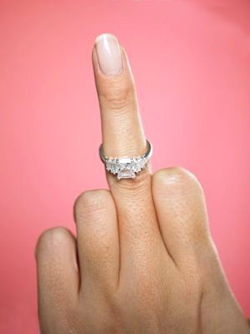
6. BUYING THE SOLUTIONS TO RELATIONSHIP PROBLEMS
What It Is: Any time a major conflict or issue comes up in the relationship, instead of solving it, one covers it up with the excitement and good feelings that come with buying something nice or going on a trip somewhere.
My parents were experts at this one. And it got them real far: a big fat divorce and 15 years of hardly speaking to each other since. They have both since independently told me that this was the primary problem in their marriage: continuously covering up their real issues with superficial pleasures.
Why It’s Toxic: Not only does it brush the real problem under the rug (where it willalways re-emerge and even worse the next time), but it sets an unhealthy precedent within the relationship. This is not a gender-specific problem, but I will use the traditional gendered situation as an example. Let’s imagine that whenever a woman gets angry at her boyfriend/husband, the man “solves” the issue by buying the woman something nice, or taking her to a nice restaurant or something. Not only does this give the woman unconscious incentive to find more reasons to be upset with the man, but it also gives the man absolutely no incentive to actually be accountable for the problems in the relationship. So what do you end up with? A checked-out husband who feels like an ATM, and an incessantly bitter woman who feels unheard.
What You Should Do Instead:
My parents were experts at this one. And it got them real far: a big fat divorce and 15 years of hardly speaking to each other since. They have both since independently told me that this was the primary problem in their marriage: continuously covering up their real issues with superficial pleasures.
Why It’s Toxic: Not only does it brush the real problem under the rug (where it willalways re-emerge and even worse the next time), but it sets an unhealthy precedent within the relationship. This is not a gender-specific problem, but I will use the traditional gendered situation as an example. Let’s imagine that whenever a woman gets angry at her boyfriend/husband, the man “solves” the issue by buying the woman something nice, or taking her to a nice restaurant or something. Not only does this give the woman unconscious incentive to find more reasons to be upset with the man, but it also gives the man absolutely no incentive to actually be accountable for the problems in the relationship. So what do you end up with? A checked-out husband who feels like an ATM, and an incessantly bitter woman who feels unheard.
What You Should Do Instead:
Actually, you know, deal with the problem. Trust was broken? Talk about what it will take to rebuild it. Someone feels ignored or unappreciated? Talk about ways to restore those feelings of appreciation. Communicate!
There’s nothing wrong with doing nice things for a significant other after a fight to show solidarity and to reaffirm commitment. But one should never use gifts or fancy things toreplace dealing with the underlying emotional issues. Gifts and trips are called luxuries for a reason, you only get to appreciate them when everything else is already good. If you use them to cover up your problems, then you will find yourself with a much bigger problem down the line.
http://markmanson.net/6-toxic-habits/
Now, as someone who suffers from Mental Illness, is in recovery from addiction and abuse; here are some guidelines to relationships with people with Bipolar Disorder (which can also apply to other disorders, addiction, and PTSD after abusive relationships)
Guide to Bipolar Disorder & Relationships
Written by Brian Krans | Published on January 5, 2012
Medically Reviewed by George Krucik, M
Blogger Natasha Tracy has bipolar disorder type-II (rapid-cycling), and has noticed that the most common pattern in relationships is fear in terms of what her condition could do to the other person, or to the relationship.
“I know my bipolar disorder can be scary and I know it can make people leave and I’m always scared people will leave me because of it,” she said. “It has happened in the past that people have left me quoting the reason ‘bipolar.’”
Her condition affects so much of her life that she tells anyone new she meets about it pretty quickly.
“In fact, it’s almost impossible for me not to. The way my life revolves around bipolar disorder symptoms, medications, side effects and just general coping, not mentioning it is like cropping out half my life,” Tracy said. “Additionally, I would much rather know that the person can’t handle it up front. If they can’t handle that I’m sick, they’re not the person for me and it’s best I find that out as soon as possible.”
The process of dating has had its share of heartbreak, and Tracy learned some pretty stark realities about her condition—that others may use it to their advantage by using her bipolar disorder against her. Still, Tracy is hopeful that she will find someone who can offer her the right kind of support, the kind that everyone needs.
“The best thing a person can do for me is provide loving support. It is best if they can be there, listen and share a hug,” she said. “Unfortunately, the person can never ‘fix’ my illness but by being there in a kind and loving way, they are helping me more than I can express.”
http://markmanson.net/6-toxic-habits/
Now, as someone who suffers from Mental Illness, is in recovery from addiction and abuse; here are some guidelines to relationships with people with Bipolar Disorder (which can also apply to other disorders, addiction, and PTSD after abusive relationships)
Guide to Bipolar Disorder & Relationships
Written by Brian Krans | Published on January 5, 2012
Medically Reviewed by George Krucik, M
Blogger Natasha Tracy has bipolar disorder type-II (rapid-cycling), and has noticed that the most common pattern in relationships is fear in terms of what her condition could do to the other person, or to the relationship.
“I know my bipolar disorder can be scary and I know it can make people leave and I’m always scared people will leave me because of it,” she said. “It has happened in the past that people have left me quoting the reason ‘bipolar.’”
Her condition affects so much of her life that she tells anyone new she meets about it pretty quickly.
“In fact, it’s almost impossible for me not to. The way my life revolves around bipolar disorder symptoms, medications, side effects and just general coping, not mentioning it is like cropping out half my life,” Tracy said. “Additionally, I would much rather know that the person can’t handle it up front. If they can’t handle that I’m sick, they’re not the person for me and it’s best I find that out as soon as possible.”
The process of dating has had its share of heartbreak, and Tracy learned some pretty stark realities about her condition—that others may use it to their advantage by using her bipolar disorder against her. Still, Tracy is hopeful that she will find someone who can offer her the right kind of support, the kind that everyone needs.
“The best thing a person can do for me is provide loving support. It is best if they can be there, listen and share a hug,” she said. “Unfortunately, the person can never ‘fix’ my illness but by being there in a kind and loving way, they are helping me more than I can express.”
(I told my husband about my diagnosis on our first date)
Disclosing Your Disorder
You don’t have to tell your newfound love interest about your condition on the first date (HAHAHAHA...I totally forgot about this part in the article)
You should, however, let the person know early in the relationship. If it’s a deal breaker for him or her, it’s better to get it out in the open right away. Besides, the best beginning to a successful relationship is an honest one.
As a general guide, in personal relationships, Dr. David M. Reiss, a psychiatrist in private practice and interim medical director of Providence Behavioral Health Hospital in Holyoke, Mass., recommends discussing the issue of the bipolar disorder when and if the relationship has reached a level of closeness or intimacy where there is talk of some type of commitment, such as exclusivity.
“I suggest preparing to discuss bipolar disorder in as unemotional terms and as much ‘plain language’ as possible,” he said. “No need to go into biochemical or psychodynamic explanations—unless a relationship has reached that level of intimacy/closeness.”
You don’t have to tell your newfound love interest about your condition on the first date (HAHAHAHA...I totally forgot about this part in the article)
You should, however, let the person know early in the relationship. If it’s a deal breaker for him or her, it’s better to get it out in the open right away. Besides, the best beginning to a successful relationship is an honest one.
As a general guide, in personal relationships, Dr. David M. Reiss, a psychiatrist in private practice and interim medical director of Providence Behavioral Health Hospital in Holyoke, Mass., recommends discussing the issue of the bipolar disorder when and if the relationship has reached a level of closeness or intimacy where there is talk of some type of commitment, such as exclusivity.
“I suggest preparing to discuss bipolar disorder in as unemotional terms and as much ‘plain language’ as possible,” he said. “No need to go into biochemical or psychodynamic explanations—unless a relationship has reached that level of intimacy/closeness.”
(My hubs was clearly not scared off by my story, we had our second date the next day...he has a softball face injury)
What to Expect
One of the biggest challenges bipolar disorder can create in relationships is the uncertainty and uneasiness of mood swings, Dr. Michael Brodsky, medical director of Bridges to Recovery, a residential treatment facility, said.
The low levels of enjoyment and withdrawal during the depression, and the inattentiveness and self-focused behavior during the mania can be discouraging to a partner, especially during the early parts of a relationship, Dr. Brodsky said.
During the mania, there is also a chance for a person with bipolar disorder to become promiscuous or hypersexual, but that isn’t a guarantee the person will.
Mania can also mean the person can be more spontaneous, creative, charismatic, inspirational, and energetic, Dr. Brodsky said.
One of the biggest challenges bipolar disorder can create in relationships is the uncertainty and uneasiness of mood swings, Dr. Michael Brodsky, medical director of Bridges to Recovery, a residential treatment facility, said.
The low levels of enjoyment and withdrawal during the depression, and the inattentiveness and self-focused behavior during the mania can be discouraging to a partner, especially during the early parts of a relationship, Dr. Brodsky said.
During the mania, there is also a chance for a person with bipolar disorder to become promiscuous or hypersexual, but that isn’t a guarantee the person will.
Mania can also mean the person can be more spontaneous, creative, charismatic, inspirational, and energetic, Dr. Brodsky said.
The most important things a partner can have for someone with bipolar disorder is patience and tolerance, Dr. Brodsky said. A successful relationship involves a partner who is willing to tolerate uncertainty, learn to help the other person modify negative behavior, and is willing to let go of control.
“Trust is big,” he said. “They’re not going to be able to have the ability to control everything.”
When a partner becomes a partner in treatment, he or she can gain a better insight into how a person feels, how therapy affects them, or how to spot the changes in mood.
Make a Contract
You don’t have to sit down with a lawyer like you’re going through a prenuptial agreement, but you should set aside some time to make an agreement over things related to your bipolar disorder.
“Absolutely we are looking to come to an agreement and some ground rules,” Dr. Brodsky said. “Whether the contract is written or not is the least important issue.”
Some of these guidelines include guidelines for when a partner needs to intervene on potentially destructive behavior, and what a partner can do to enforce the contract, Dr. Brodsky said.
If you’re well in tune with your disorder and can feel the shift from mania to depression or vice versa coming, tell your partner. That’s when it’s important to stick to your contract.
There Will Be Problems
Every relationship has its problems, no matter how perfect it seems to be. A large part of relationships when one partner has bipolar disorder is distinguishing when a problem is a normal problem, or when it stems from something related to bipolar disorder.
Say, for instance, you have an argument over whose turn it is to do the dishes. That’s a normal problem. Tracy, like many other people with bipolar disorder, learned to distinguish what is a normal relationship problem, what is a serious problem, and when she’s being blamed for something. She’s learned when people use her
illness as an excuse, and then it’s off to the curb with them.
“People will blame your bipolar disorder for their bad behavior. While with other illnesses it is much less acceptable to leave someone for, say, cancer, but it’s perfectly okay in some people’s minds to leave someone because of a mental illness,” she said. “And, for some, it’s perfectly okay to treat someone badly because of a mental illness too. And it’s also okay to blame every behavior you don’t like on your partner’s mental illness. What I wish I knew is that even though I never use my illness as an excuse, other people will.”
(Here we are celebrating our engagement!)
Bipolar Disorder and Marriage
Any number of things, from work stress to money issues, can lead to arguments and put strain on a marriage. But when one partner has bipolar disorder, simple stressors can reach epic proportions. That may be why as many as 90% of marriages involving someone with bipolar disorder reportedly fail. McNulty watched not only his own marriage fall apart, but the marriages of others with bipolar disorder as well. "I've been running a support group for almost 19 years," he says. "I've seen dozens of couples come through the door with their marriage in tatters." Bipolar disorder "puts a huge additional strain on a relationship, particularly when you don't have a diagnosis." (I do have a diagnosis, treated and stabilized, and we both have our Jesus)
Healing a Troubled Relationship
Having a relationship when you live with bipolar disorder is difficult. But it's not impossible. It takes work on the part of both partners to make sure the marriage survives.
The first step is to get diagnosed and treated for your condition. Your doctor can prescribe mood stabilizing medications, such as Lithium, with antidepressants to help control your symptoms. Therapy with a trained psychologist or social worker is also important. With therapy you can learn to control the behaviors that are putting stress on your relationship. Having your spouse go through therapy with you can help him or her understand why you act the way you do and learn better ways to react.
"I think the more a partner can learn about these things, the better role he or she can play," Haltzman says. "Being involved in treatment can really help make the treatment for bipolar disorder a collaborative effort. And it will actually increase the sense of bonding."
Having a relationship when you live with bipolar disorder is difficult. But it's not impossible. It takes work on the part of both partners to make sure the marriage survives.
The first step is to get diagnosed and treated for your condition. Your doctor can prescribe mood stabilizing medications, such as Lithium, with antidepressants to help control your symptoms. Therapy with a trained psychologist or social worker is also important. With therapy you can learn to control the behaviors that are putting stress on your relationship. Having your spouse go through therapy with you can help him or her understand why you act the way you do and learn better ways to react.
"I think the more a partner can learn about these things, the better role he or she can play," Haltzman says. "Being involved in treatment can really help make the treatment for bipolar disorder a collaborative effort. And it will actually increase the sense of bonding."
(We are committed through eternity)
As much as you’d like to be there for the person, there comes a point where you must weigh your options and decide if it’s time to walk away and end the relationship.
Here are some important questions you should ask yourself before making your decision:
Is the person making an effort to improve their condition?
Is his or her condition improving?
How patient can you be?
Does the person’s behavior put your health at risk?
Can you accept the person the way he or she is or do you want the person to change?
Do you prefer stability or are you looking for excitement?
If you want a person to change, you must first realize how hard it is to change yourself. While treatments for bipolar disorder can help control the condition, it will be a constant battle throughout his or her life.
Dr. Michael Brodsky, medical director of Bridges to Recovery—a crisis stabilization center with several locations in California—said while people with bipolar disorder are known to be creative, charismatic, energetic, and inspirational, they can also be unpredictable, promiscuous, inattentive, and self-focused. Some of these qualities make it hard on a relationship, so a person must weigh whether he or she wants stability over excitement, he said.
Dr. Brodsky said there’s no perfect time to end a relationship with someone who is bipolar.
If you decide to end a relationship because of a person’s bipolar disorder, try not to blame the person or their condition. It is no one’s fault that the person has the condition.
Their condition is serious, and it’s difficult to be with someone who doesn’t want to get better. If the person refuses to get help, you may choose to end a relationship.
Here are some reasons you may need to end the relationship:
Your partner is dangerous.
He or she becomes careless or reckless during mania.
Your partner blames you for his or her problems.
Your partner neglects treatments on purpose.
Dr. David Reiss, interim medical director of the Providence Behavioral Health Hospital, said the first rule thing to consider if it’s time to end a relationship is your own safety, especially if a person is unstable.
“Of course leaving without warning or discussion will be destabilizing for the other person, but if it is an issue of safety, you must protect yourself,” Dr. Reiss said. “Even if there is no risk of danger or violence, keep in mind that you cannot predict or take responsibility for the other person’s behaviors. They may respond with more intense anxiety, depression or anger than you expect or they might have been closer to wanting to break it off themselves than you realized, and may react with relief —or denial.”
Dr. Reiss said the nature of the commitment. Married couples take a vow to remain together “for better or worse, in sickness or in health…” where leaving the person “can be seen as abandonment and sabotage – and there is a reality to that perception.”
“There are still times it is reasonable to leave, but do not deny responsibility for having broken your promise,” Dr. Reiss said. “You can try to explain it, your reasons may be valid, but take responsibility and validate the other person’s feelings.”
If you’re not married, it is NOT abandonment or sabotage, no matter how the other person perceives it.
“But if you start feeling guilty when the reality is that you had not made the commitment the other person implicitly expected, your guilt will trigger anger, depression, etc. in both yourself and in the other person and make it worse,” Dr. Reiss said. “Work through your own guilt as much as possible before, during and after the break-up.”
You can attempt to be as supportive as possible during the break up, but some people do not want help and support because they feel rejected.
“They may not be capable of ‘working through’ a relationship ending in an effective way, and mature ‘closure’ may be impossible. Be kind, but not overbearing, and realize that once you are ending the relationship, your kindness may not be welcome anymore, and that’s ok,” he said. “Don’t take it as a personal attack. If you come across as hurt or angry because your attempts to ‘let them down easily’ aren’t working, that only makes the situation worse. Acknowledge that how the other person reacts, and their ability to maintain even a superficial or polite relationship after a perceived rejection, may be inherently limited and beyond your control. Do try to be compassionate, but be ready to have that compassion rejected without taking it personally.”


No comments:
Post a Comment
I Love knowing your thoughts! Thank you for sharing your heart. When you comment with grace, it truly helps me while I journey through my battles.